What it was
An Anglo-French supersonic transport
Concorde was the first supersonic passenger-carrying commercial aeroplane, built jointly by manufacturers in Great Britain and France.1
Britain and France signed a treaty to share the costs and risks of producing a supersonic transport on 29 November 1962.1
National Museums Scotland dates the Anglo-French treaty to 29 November 1962.2
British Aerospace and the French firm Aérospatiale were responsible for the airframe; Rolls-Royce and SNECMA developed the jet engines.1
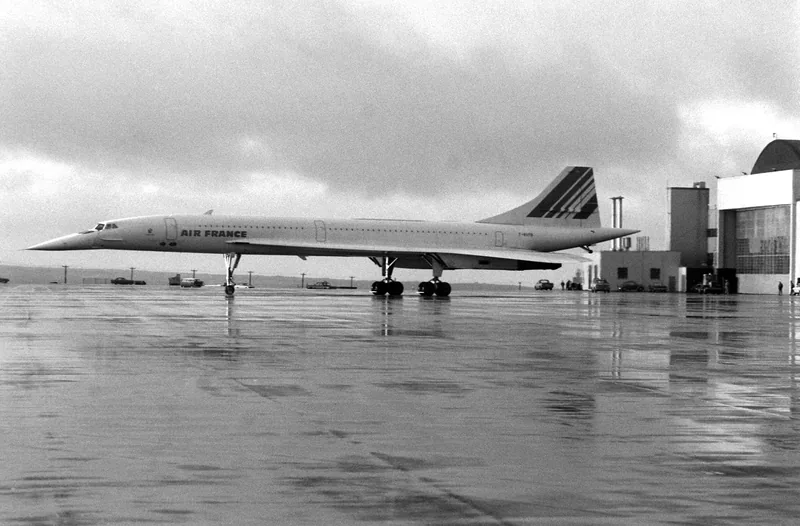
The Concorde made its first flight on 2 March 1969.1
National Museums Scotland says the first flight was on 2 March 1969, when the 001 prototype took off from Toulouse.2
When the French test pilot landed Concorde for the first time, National Museums Scotland records, he simply said “The big bird flies…”.2
The British-made prototype 002 flew from Filton a few weeks later. Both prototypes were displayed at the Paris Air Show in June of the same year.2
Prototype 002 is on display at the Fleet Air Arm Museum in Yeovilton, according to the Science Museum.3
The Science Museum notes that the aircraft served passengers from 1976 to 2003.3
Only 14 of the aircraft actually went into service.1
Encyclopaedia Britannica says the development costs of the Concorde were so great that they could never be recovered from operations, and the aircraft was never financially profitable.1
The later story — the opening routes, the Atlantic crossing, and the end of the service — sits in the flight folder and on the retirement page.